
The Power in Numbers: Rebuilding the Creative Ecosystem
Written by Alexander Gooch
July 2026
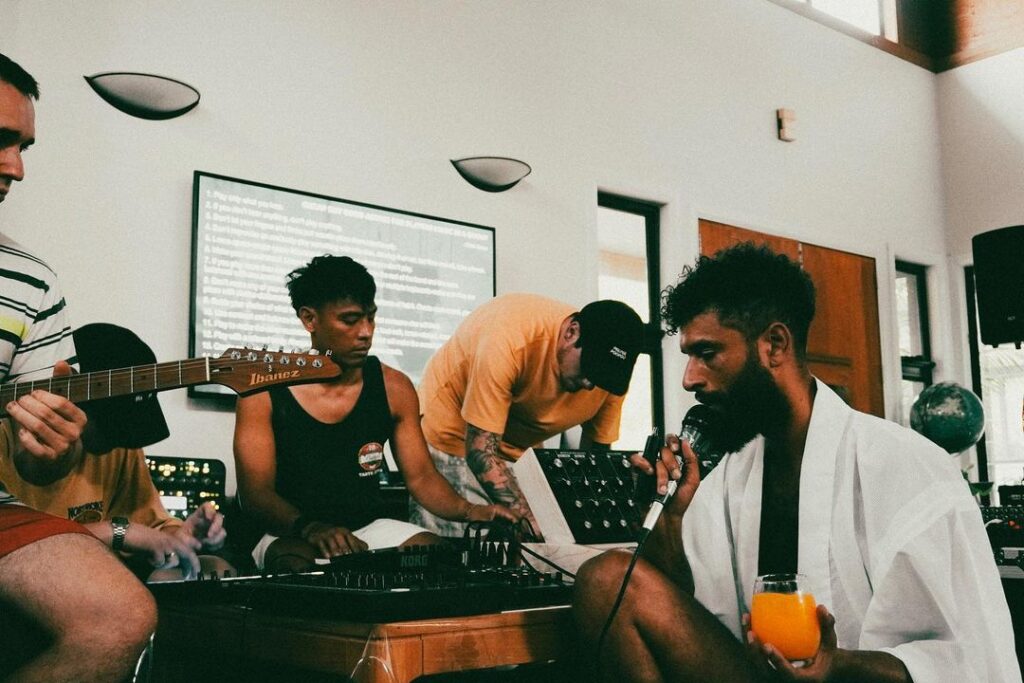
For many creative souls this time period is challenging to say the least. With a chronic saturation of the music industry, drastic devaluation of physical media, cost of living driving away smaller galleries from our capital cities and the music festival community in Australia all but disappearing, it is clear to see the need for a shift of approach. Not just in humans but all living things, extreme conditions tend to prompt incredible new adaptations. The purpose of this article is to discuss the amazing power that numbers have in the rebuilding of a healthy creative industry in Australia and propose a more purposeful and synchronized approach moving forward.
Institutional Isolation & The Historical Cycle
We humans love to create. We create all the time, some of it big and lasting thousands of years, some of it conceptual and shaping our progression through history. One thing we have always done by default is form community. It is hardwired into us to come together and survive even prior to the development of language, tools, farming and all the gifts of modernity. If we look specifically at history through an artistic lens, there occurs repeatedly a cycle of significant creative expression and defiance, then a shedding and decline in expression through convergent thinking, then back again. This cyclic nature often coincides with the development of societies and institutions, some acting as fuel to the flame of creativity in a culture and some acting more like a firewall, blocking any new idea from being fully explored. These institutions are both our blessings and our curse, as just as easily as they can support and promote something they can also suppress and reject it. Gates exist to keep people out, or they can let people in, it just depends on who is controlling that gate and what mindset they subscribe to.
A perfect example can be found in nineteenth century Paris. The Salon de Paris exhibit famously rejected impressionism as a mode of artistic expression under the direction of the Academie des Beaux Arts, an academic society established in 1816 that used its political powers to control the direction in which artistic culture progressed. Closing the door to an entire generation of artists and discrediting a now widely loved style of art, this kind of selective acceptance narrows the future for many artists leading to isolation, lost opportunities and the exploitation of art by these controlling authorities (1874: The Birth of Impressionism | National Gallery of Art, 2024).
Despite this being a perfect example, it is not isolated to the last century or even this era, with a parade of artists through human history driving moments of rebellion, defiance and raw human expression. Look to today and you will find passionate artists still attempting to claim back their identity from these institutions, some speaking out loudly on the injustice, exploitation and dehumanization driven by corporate, commercial and algorithmic control (Kafer & Quick, 2023). Though this repeating cycle may seem all encompassing and perpetual, there is a need for such dissonance in our world as this defiance ends up driving some of the best works in human history and represents one of the core balancing dynamics of life itself.
The Shift to Positive Determination
When the creative swing back comes, it is very tempting to fall lockstep into the same system that already exists, as the path is paved and often comfortable by design. Artists get a flash of inspiration but steer it away from the messy and dissonant world they know towards a curated and marketable option. Historically the best way to honor the original spark of creativity is in the name. Creative traces back to the Latin verb creare, meaning to make, bring forth, or produce. Being creative means being productive, adding to society, producing new and amazing things, a positive force in the world.
Through this positivity lies the path forward, an entirely new framework built on a foundation of positive determination. Far too many believe that the best response to negativity is to be negative in return, therefore nullifying the power they originally had. I propose a different solution. There has been much said about the power of positivity and its effects on communities and outcomes. One such theory called the broaden and build theory outlines brilliantly how positive emotions lead to the broadening of community and individual potential. The drive to explore and create, experiment and play from positive environments can lead to novel ideas, stronger social bonds and a more genuine community, that raw zesty human artistic work (Fredrickson, 2004).
It is interesting when you consider the above, and see the existing framework being fundamentally consuming and negative in nature, that we still without fail attempt to adjust creative expression to suit the system that no longer serves our best interest. If collectively a push can come leading the next generations of creatives out of this binding industry mindset and towards a more positive, free spirited and expressive approach to creativity, we can look forward to the boundaries once again. Likened to a return of the artistic humanistic boom that followed the release from the oppressively religious dark ages (Cartwright, 2020). Excitingly there has already been the first nudges towards this and truthfully, it never left. Their effectiveness has been fluctuating through its support and popularity, but there has never been a complete lack of the few in the artistic world pushing towards the boundaries.
Small Collectives as Safe Incubators
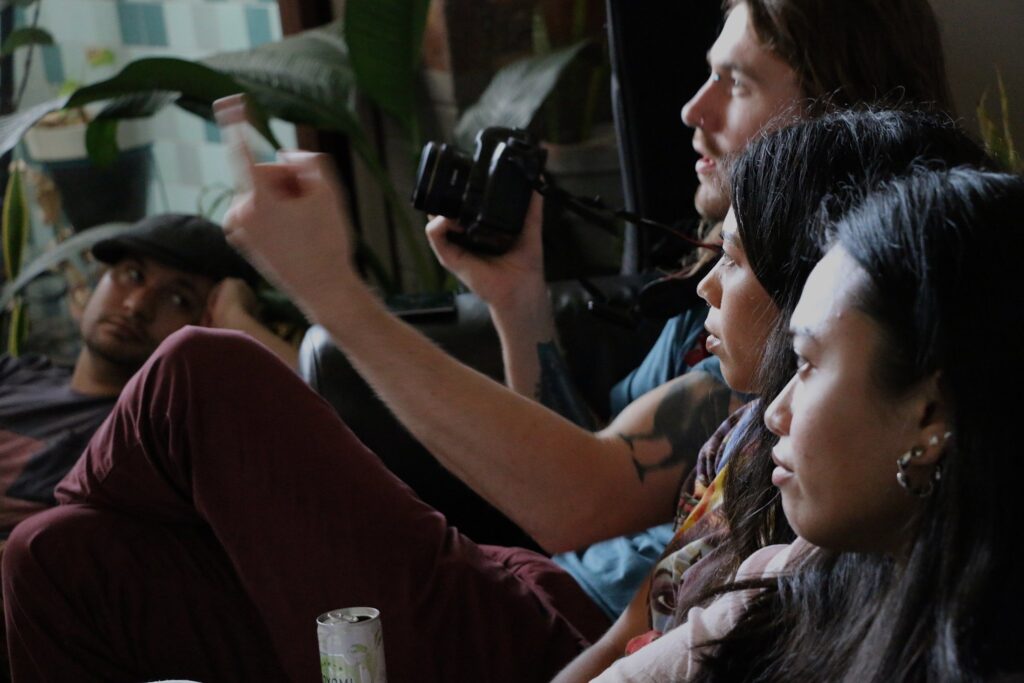
Small creative groups, societies, collectives are no new concept and often occur as a response to a breakdown of traditional modern social networks (Chiu, 2025). These small creative villages have been essential in supporting real artistic communities and thwarting the resulting isolation tied to industry exclusion algorithmic grooming. Independent music communities for example are still strong in the current climate, with the occasional and lacking government subsidies and grants doing their best to sustain them. Without these sparse few outlets of true community, some industries would have collapsed entirely by now. This highlights the potent effect that small creative incubators like these can have on the future of the arts.
Many social and economic studies on independent artist groups highlight how smaller networks can allow for bolder and more genuine expression through a supportive community that treasures experimentation, unconventional and high risk ideas. This is in part due to the supportive nature of the community members who share a creative mindset, and the removal of commercial and social pressures from existing institutions. The power that these small communities can bring is exponential, with one new idea often inspiring the next new idea leading to a completely new genre, ethos, or industry that we cannot define before it occurs. By removing the anxiety of negative judgment or consequences to expression, the initial fire of the art is preserved. A truly creative thinking as opposed to convergent thinking. These have the added benefit of being incredibly easy to establish, often needing no more than two people to create some kind of community. This makes the entry point to collaboration incredibly accessible, yet another strength of small community and the benefits of a village mindset in music.
The Ground Up Industry Framework
Let us say that in one city, 50 people create two different collectives for their art. One is an artist run gallery, and one is a music label collective. Immediately, the art collective has 25 attendees (24 if you remove the artist who is a member). This is guaranteed engagement that will at a minimum sustain itself, as the crowd values the collective and actively participates to protect their creative stream. Now let us imagine that these two collectives start to collaborate. Now you have 50 attendees from different backgrounds and the collaboration can bring forth new ideas. An example could be that one of the musicians is playing a set at the gallery, and a musician falls in love with a sculpture that inspires their next release.
This concept aligns with Michael Porters Cluster theory which highlights the power small independent entities have when they collaborate locally, bringing forth strong self sustaining grassroots communities (Porter, 1998). This theory is incredibly relevant now as global culture is no longer an effective epicenter of commercial competition, as the individual is lost in the numbers, whereas a collective has the bonus of being individual focused and therefore each artist is supported.
These collectives can grow naturally as others join the cause bringing opportunity for the next organizational tier, the support tier to form. There are connective organizations that can join collectives for commercial interests, promotional benefits and greater commercial viability. To put this into a real life scenario imagine presenting yourself to the world as John Hats Hat Shop and trying to compete within a saturated global market, challenging. So you join the Hatters of Pitt street, a collective that pools resources and reach. Next someone comes to the Hatters of Pitt street and the George street Hat Collab (a similar collaboration) and thus forms an institution that brands and promotes the hat industry of Sydney as its own culture. In turn, this brings Johns Hat shop into the global stage with a backing stronger than if they were alone.
People crave these kinds of genuine connections, not due to commercial gain or ease of economy, but for the authenticity that comes from these small independent entities. This example has been focused on business, but the concept can apply to creative industry just the same. Each independent artist is essentially a shop, trying to reach an audience therefore the same methodology can be applied to give artists and creators a fair chance to connect with a local and eventually a global audience.
The Cultural Swing and AI Fatigue
Currently the world is poised and the climate for a decentralized more human centric creative framework is immaculate. The main chance is in front of an entire generation of reactive souls who have been quietly working away at their craft. Already these smaller communities existed, but more and more inventive ideas to compete with the global reach of the current framework are being made. This is the start of a swing back from the drastic AI uptake in the arts.
Recent cultural analyses on widespread AI fatigue highlights that consumers are driving a return to raw, human and physical media such as community events, small scale venues and merchandise (Cunningham et al., 2025). This is that main chance, the future is slowly unfolding and it isn’t a user generated content ad, it is a crying scream from a flawed and beautiful human. The last decade has seen a saturation of algorithmically influenced art by either AI or humans who have limited their creative expression to conform to the digital culture preferences and the marketing ideals of large scale organizations. This creates a vacuum that the old corporate industry framework simply cannot fill, but smaller creative communities can as their authenticity remains strong at a smaller scale. Enter the community leaders, the collectives, the collaborations, the loud voices and the artists who broke through the noise. These leaders of the cultural swing back are the best hope for the rebuild of a framework that works for artists, one that is creative in nature, not destructive.
Unifying the Modern Australian Movement
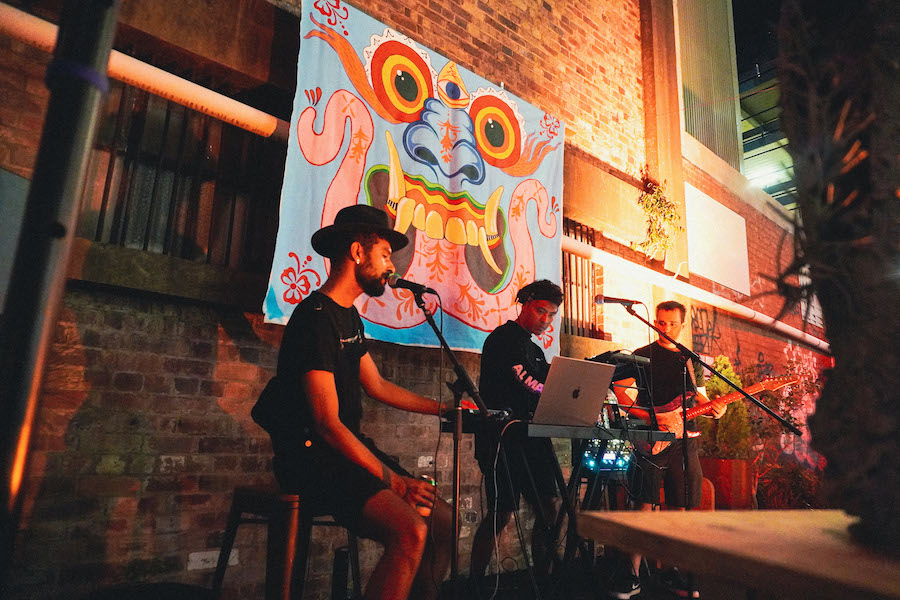
It is time for true collaboration on the second tier, a synchronized and intentional organization of smaller collectives and communities. The already existing collectives are the ones who can pull this off by booking the gigs, hosting the events, starting the conversation and inviting the people in to build a truly self sustaining artistic ecosystem. Thankfully we do not have to start from scratch as there have been some incredibly insightful and forward thinking people through the generations who have started the groundwork. Already in Australia each capital city has its own legendary independent music outlets that have kept the fight going for these smaller communities, such as 4zzz, Fbi radio, 3RRR (second tier larger communities), and a huge amount of collaborations and collectives on a smaller scale that align with specific crowds areas and genres.
These grassroots trailblazers have kept the fight going and gotten the ball rolling for this incoming cultural swing back. If any of these decide to move up to a second tier role, they can bring even more collectives together and host even larger events, giving powerful platforms and support to a new and vibrant creative industry. If enough artists can get involved and do their part for the promotion of a new framework, the arts can have a lasting and impactful place in the Australian and world communities once again. We have all the trimmings of a wealthy and modern society to support the rollout of such a new framework with minimal outlay and maximum impact. It only takes the gathering of enough passionate and authentic artists who are genuinely supported by a small community.
So how can you connect with these communities and be an active member in this positive change? There are some collectives that are solving this issue already. The shift has already begun with platforms like Audius, a blockchain based music platform run entirely by an open community of artists and fans, placing the control of the music back in the hands of the artist who made it. There is also Bandcamp giving musicians a platform to promote themselves independently outside of the traditional corporate framework. An exciting collaboration tool called Goodhood, developed by the Australian collective Shoku is a community driven platform that enables the discovery of emerging talent, highlighting the exact attitude and approach that can help to rebuild a positive creative industry discussed above.
This is an exciting time, the calling for authentic expression is growing louder and louder from both artists and art enjoyers alike. Through viewing the cyclic nature of human creative expression over the different civilizations, it is easy to see that when our predecessors first came against these lulls in their ability to express, it would have felt as if the whole world was against them just as many feel now. But we are lucky to not only have incredible resources at our disposal as artists, but also to live in a time where the return of love for the arts looms on the horizon, the main chance lies with the arts.
In the spirit of utilising modern tools to support creative expression, AI was used as a research assistant, proofreader, not generative in any way.
References
1874: The Birth of Impressionism | National Gallery of Art. (2024, September 4). National Gallery of Art. https://www.nga.gov/stories/articles/1874-birth-impressionism
Kafer, G., & Quick, T. (2023). ALGORITHM. 451–463. https://doi.org/10.1002/9781119841814.ch32
Fredrickson, B. L. (2004). The Broaden and Build Theory of Positive Emotions. Philosophical Transactions of the Royal Society of London. Series B: Biological Sciences, 359(1449), 1367–1377. https://doi.org/10.1098/rstb.2004.1512
Cartwright, M. (2020, November 4). Renaissance Humanism. World History Encyclopedia, World History Publishing. https://www.worldhistory.org/Renaissance_Humanism
Chiu, Y. T. (2025). Socioeconomic Factors Influencing the Growth and Sustainability of the Village Movement. Journal of Aging Research, 2025(1). https://doi.org/10.1155/jare/5295292
Porter, M. E. (1998). Clusters and the new economics of competition. Harvard Business Review, 76(6), 77–90. https://pubmed.ncbi.nlm.nih.gov/10187248/
Cunningham, C. V., Radvansky, G. A., & Brockmole, J. R. (2025). Human creativity versus artificial intelligence: source attribution, observer attitudes, and eye movements while viewing visual art. Frontiers in Psychology, 16. https://doi.org/10.3389/fpsyg.2025.1509974